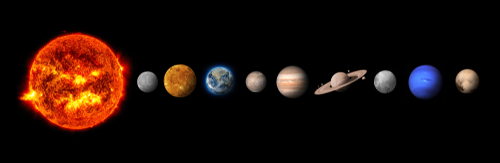
Jupiter
Jupiter, the largest body in the Solar System. The planet is composed mostly of liquid hydrogen and helium. It weighs twice more than all other planets put together. It spins on its axis faster than any other planet. One rotation takes less than 10 hours. The four (4) largest moons are Europa, Ganymede, Callisto and Lo. The Great Red Spot was observed from the Juno space probe. The Red Spot coloring is thought to be due to red phosphorous or possibly carbon compounds. Jupiter has a cloudy atmosphere.

Jupiter
Saturn
The second largest planet in the Solar System and the easiest one to recognize through a telescope because the broad, bright rings that encircle its equator. The planet is composed of Helium and Hydrogen and has a cloudy atmosphere. Saturn has over 80 moons some which orbit around the rings. Some of Saturn’s moons include the largest, Titan, Helene, Dione, Telesto, Calypso, Tethys, Enceladus. Mimas. Epimetheus, Janus, Prometheus, Pandora, Atlas and Pam. NASA’s Cassini probe has monitored and observed Saturn’s rings.
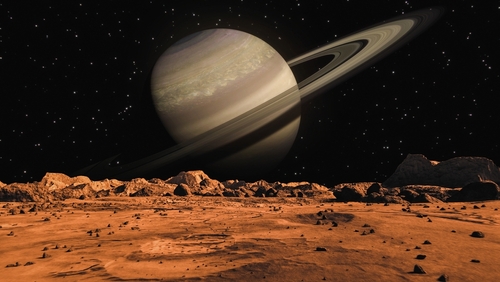
Saturn

Farnese Atlas
Credits to this Blog Page: July 24, 2025
DK_Smithsonian Handbooks Stars and Planets by Ian Ridpath-The New York Public Library-Morningside Branch
Photo JPEGs from Shutterstock
 Black Base And Color Identities